
Laser scribe-and-brake of glass
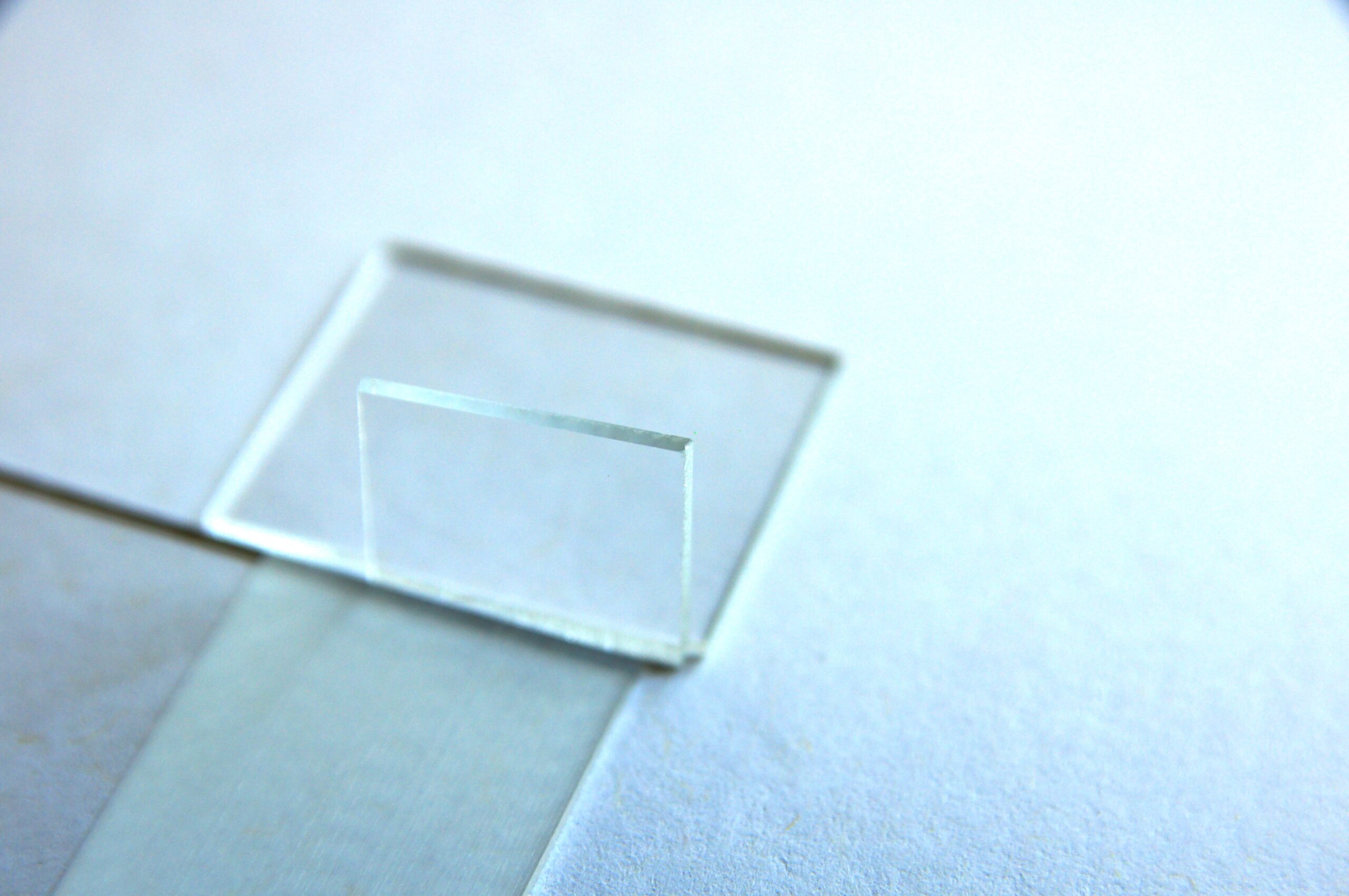
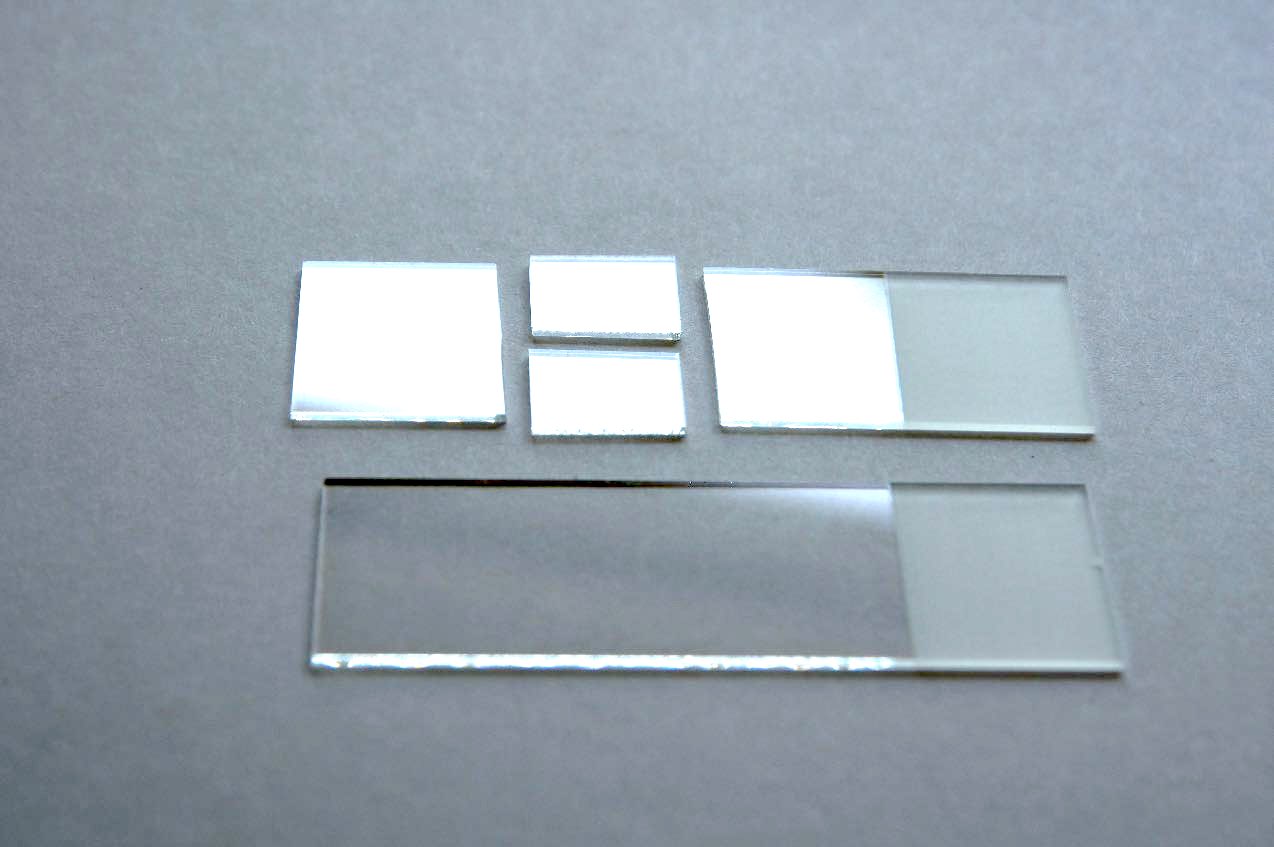
Laser-induced stress engineering allows controlled modification of the internal stress state of glass.
By tailoring laser parameters and scan strategies, predefined fracture paths or controlled cleaving can be achieved.
This is useful for precision cutting and mechanical separation of brittle materials.
Femtosecond laser glass on glass welding
Femtosecond laser welding enables direct joining of glass components through localized melting at the interface.
The process allows hermetic, high-strength bonds without adhesives or intermediate layers.
It is particularly relevant for optical assemblies, microfluidic devices and sensor packaging.
Ultrafast laser surface ablation
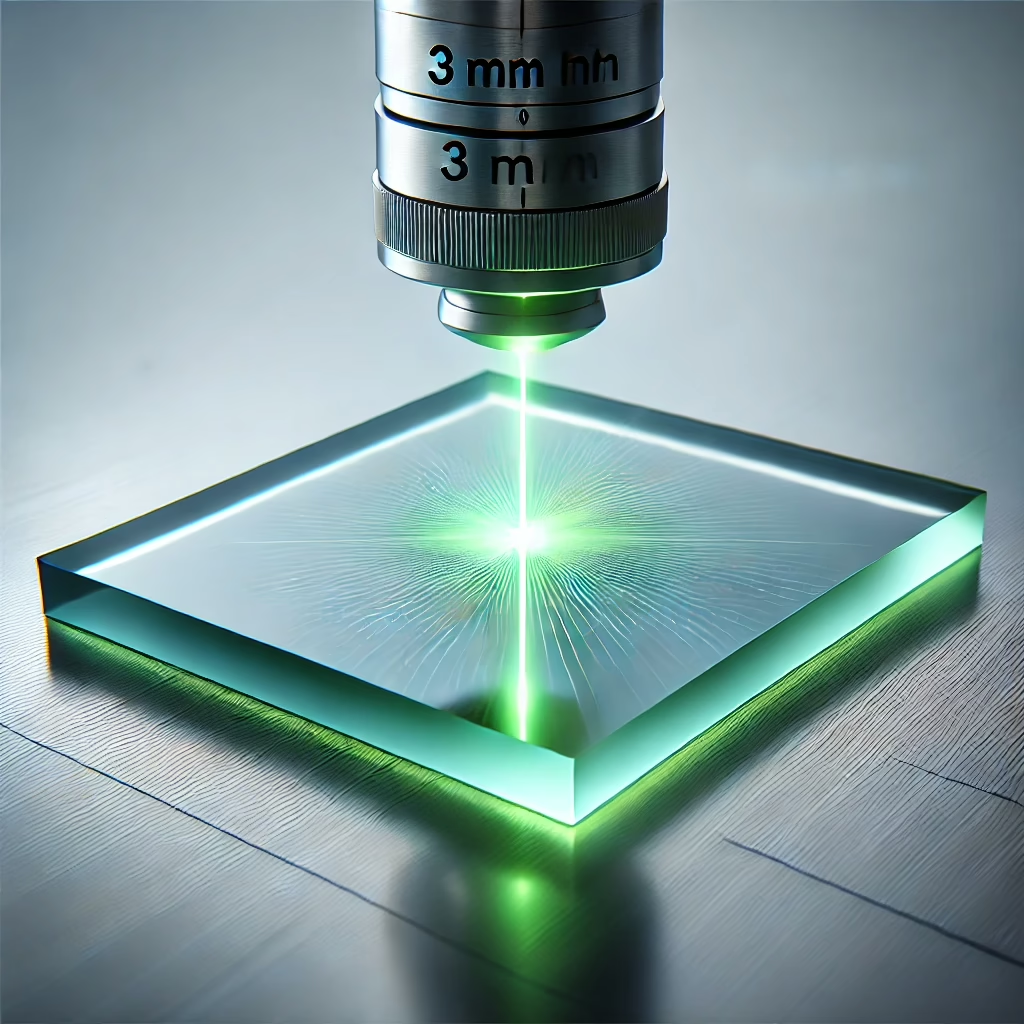
Ultrafast laser ablation enables precise material removal from glass surfaces with minimal heat-affected zones.
Due to the extremely short pulse duration, energy is deposited faster than thermal diffusion, resulting in so-called athermal or cold ablation.
This process is commonly used for micro-drilling, cutting and contouring of glass components.
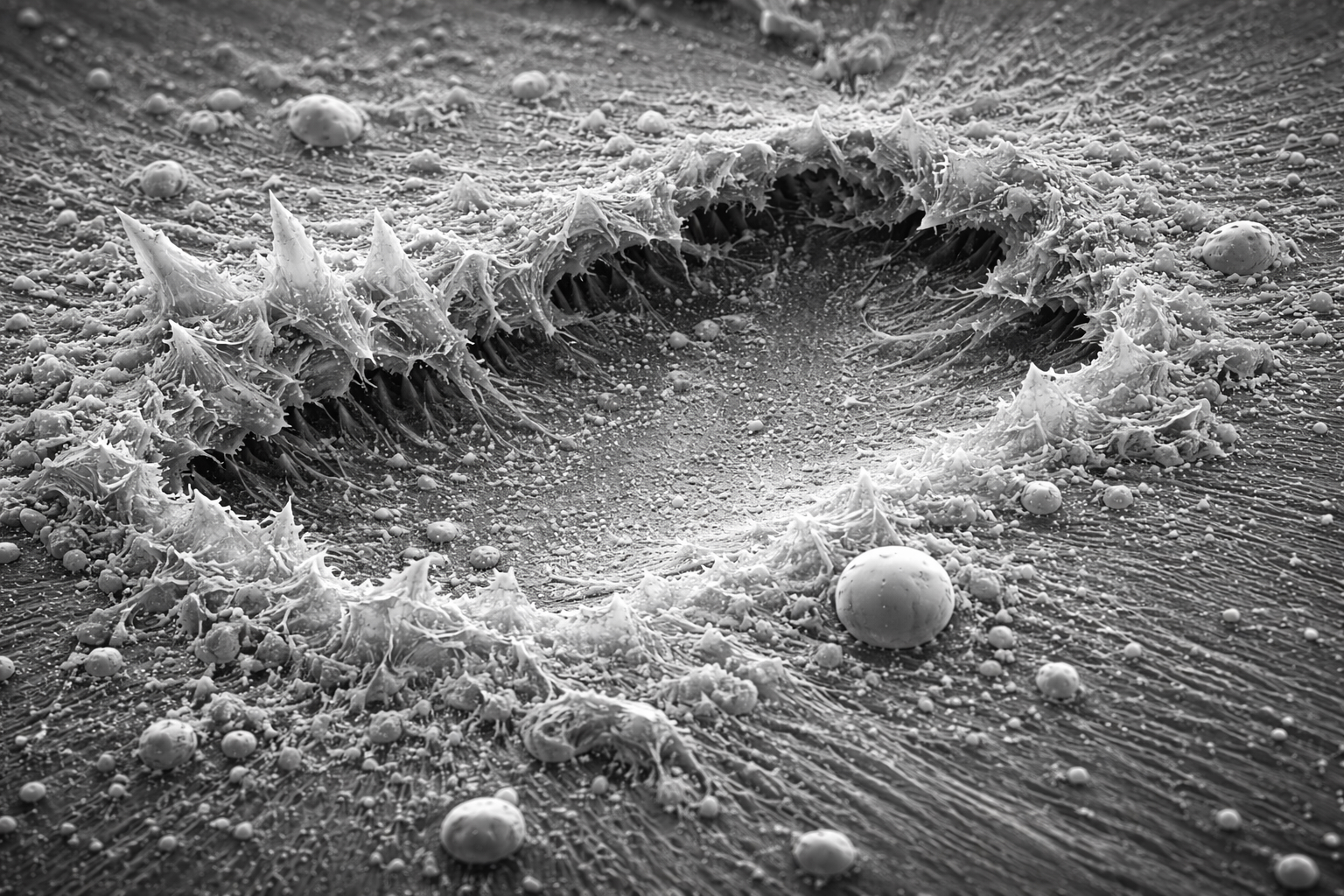
AI-generated SEM image of a glass surface after hitting by a femtosecond laser spot. The very high laser intensity leads to a strong non-linear absorption of the energy. Due to that fact, even highly transparent materials can be processed by IR or visible laser light. Due to copy rights we can not show the real SEM images
Refractive index modification (waveguide writing)
Refractive index modification (RIM) is achieved by tightly focusing ultrashort laser pulses inside glass, inducing permanent, localized changes in the material structure.
This technique is widely used for waveguide writing, integrated photonics and optical routing in transparent substrates.
The achievable index contrast and mode profile depend on laser parameters, focusing conditions and glass composition.
Bulk modification & 3D laser writing in glass
Bulk modification using femtosecond laser pulses enables localized, non-linear energy deposition inside transparent materials without affecting the surface.
This process is commonly used for 3D laser writing, allowing the fabrication of buried waveguides, photonic circuits and refractive index patterns in glass.
The interaction is highly confined to the focal volume, enabling true three-dimensional structuring with micrometer precision.
Laser Surface Texturing (LST)
Laser surface texturing (LST) modifies the topography of glass surfaces to tailor functional properties such as wettability, adhesion or optical behavior.
Depending on the laser parameters, micro- and nanoscale surface features can be generated in a controlled manner.
LST is frequently applied in materials research and functional surface engineering.
Selective Laser Etching (SLE)
Selective Laser Etching (SLE) combines femtosecond laser modification of glass with subsequent chemical etching to create complex three-dimensional microstructures.
Laser-modified regions exhibit significantly increased etch rates compared to unmodified glass, enabling high-aspect-ratio structures.
SLE is particularly suited for microfluidics, micromechanics and glass-based microdevices that cannot be realized by planar fabrication techniques.
Laser-Induced Periodic Surface structuring (LIPSS)
Laser-induced periodic surface structures (LIPSS) are self-organized patterns formed on material surfaces under ultrafast laser irradiation.
Their characteristic feature size is typically on the order of the laser wavelength or below.
LIPSS are studied for applications in optics, tribology, and surface functionalization.
Anti-reflective surface structuring
Laser-fabricated anti-reflective surfaces rely on micro- or nanoscale surface structures that gradually modify the effective refractive index at the glass–air interface.
These subwavelength structures can significantly reduce Fresnel reflections over a broad wavelength range.
Ultrafast laser processing enables maskless fabrication of such structures directly on glass surfaces.
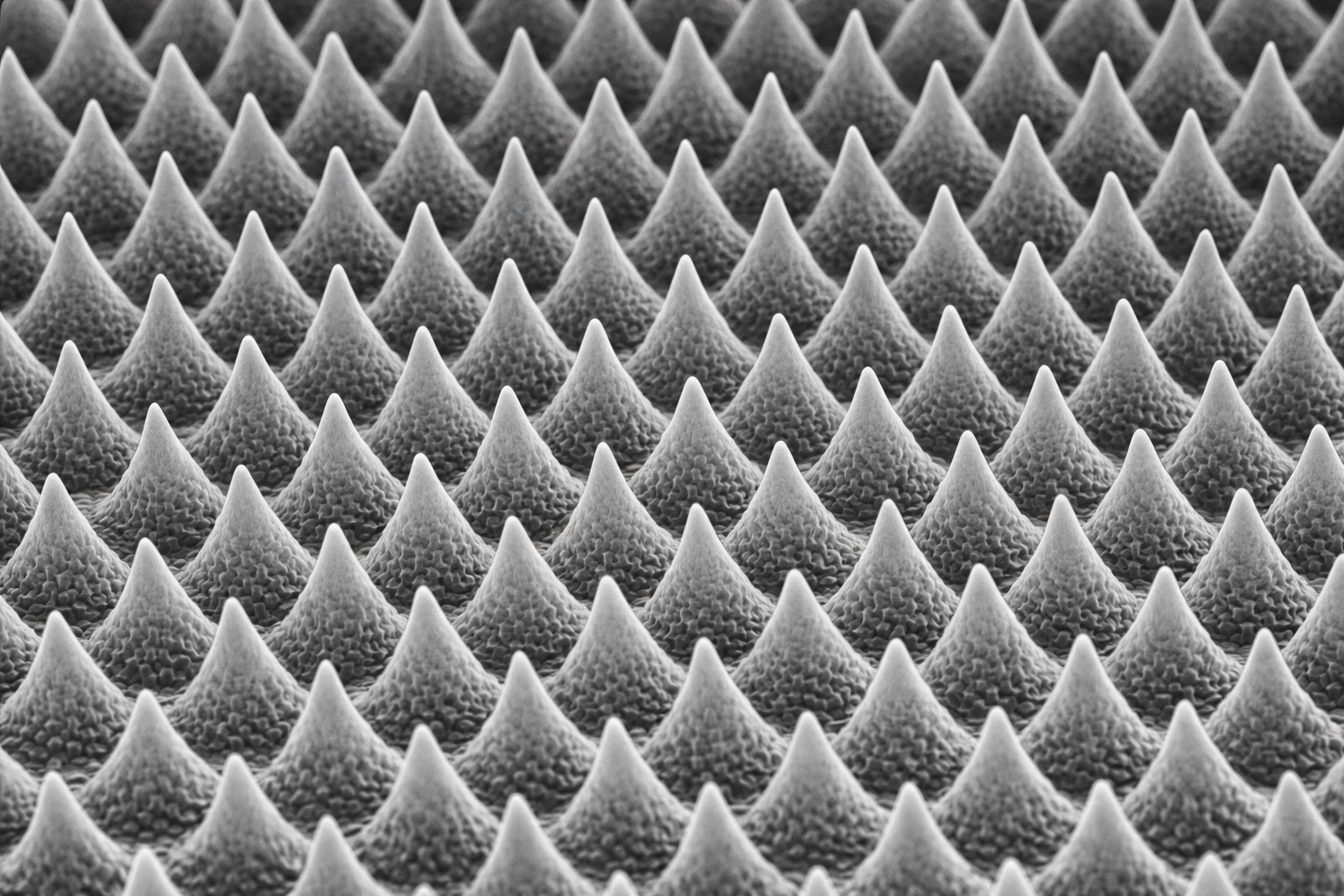
AI generated SEM image of a laser structured surface of glass
Glass–metal and glass–polymer laser joining
Ultrafast laser-based glass–metal and glass–polymer joining enables hybrid integration of dissimilar materials.
Localized energy deposition allows mechanical interlocking or fusion bonding while minimizing thermal stress.
This approach is used in advanced packaging and microsystem integration.
Our femto, pico and nanosecond laser portfolio
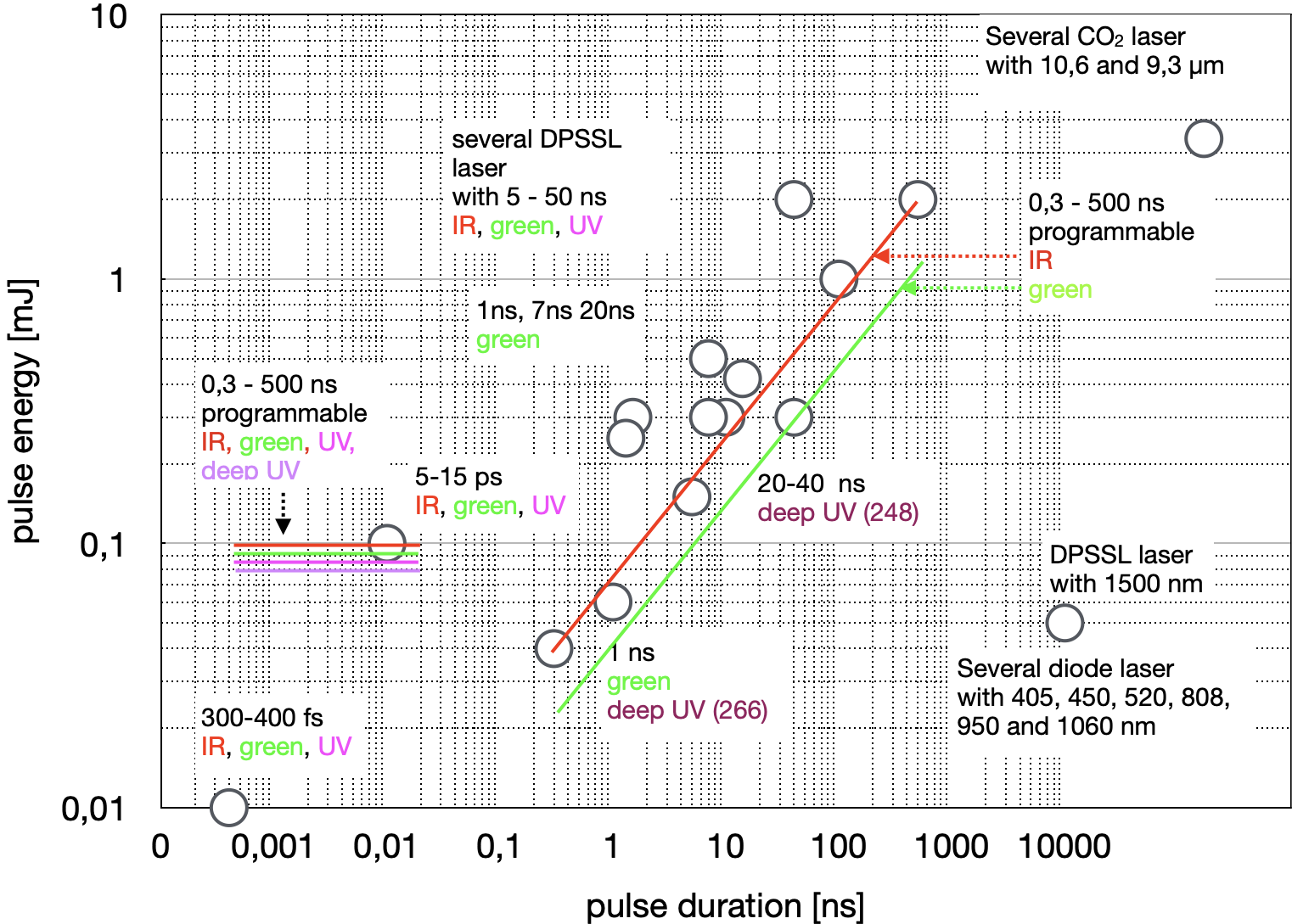
Every circle indicates an available laser with a fixed pulse duration.
Every line indicates a laser with a variable pulse duration with a range of pulse duration.
The pulse durations are selectable via computer and can be part of a receipt.
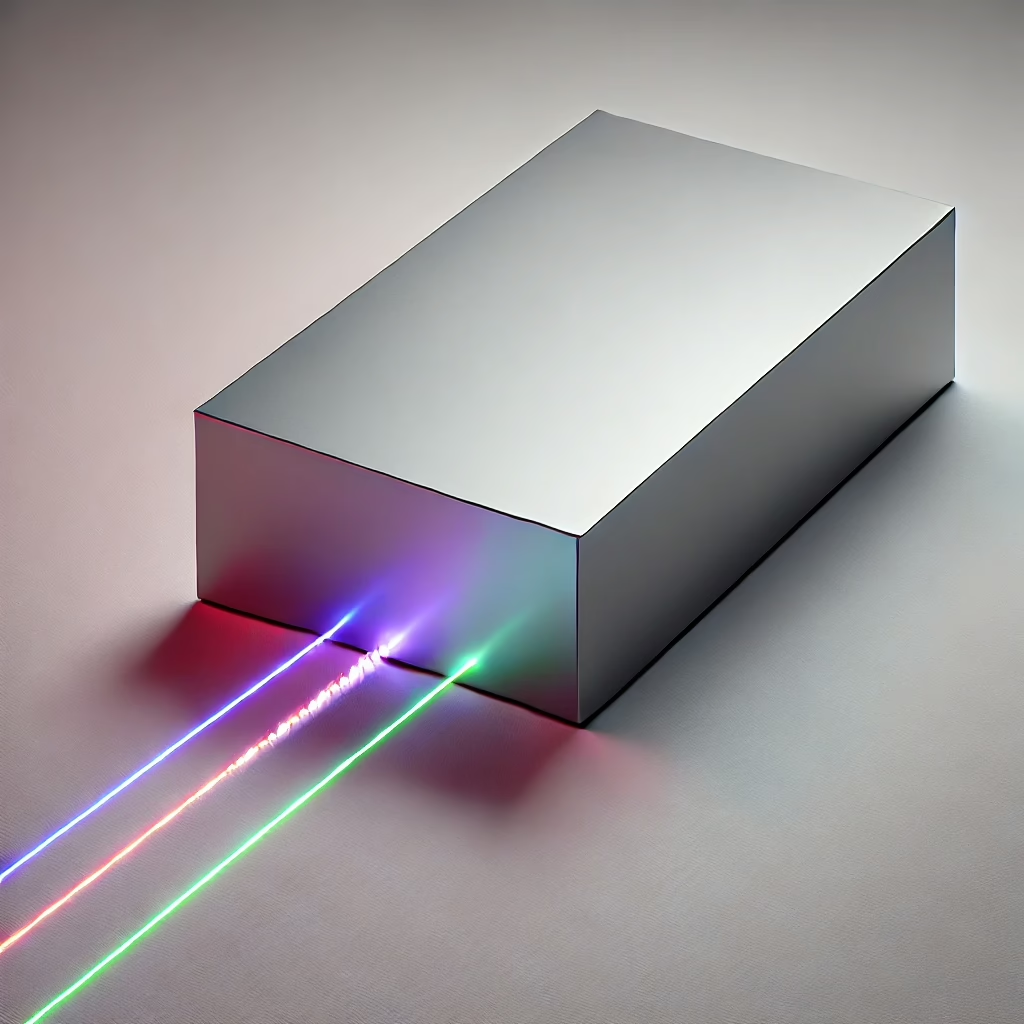
3 different wavelengths in one laser source
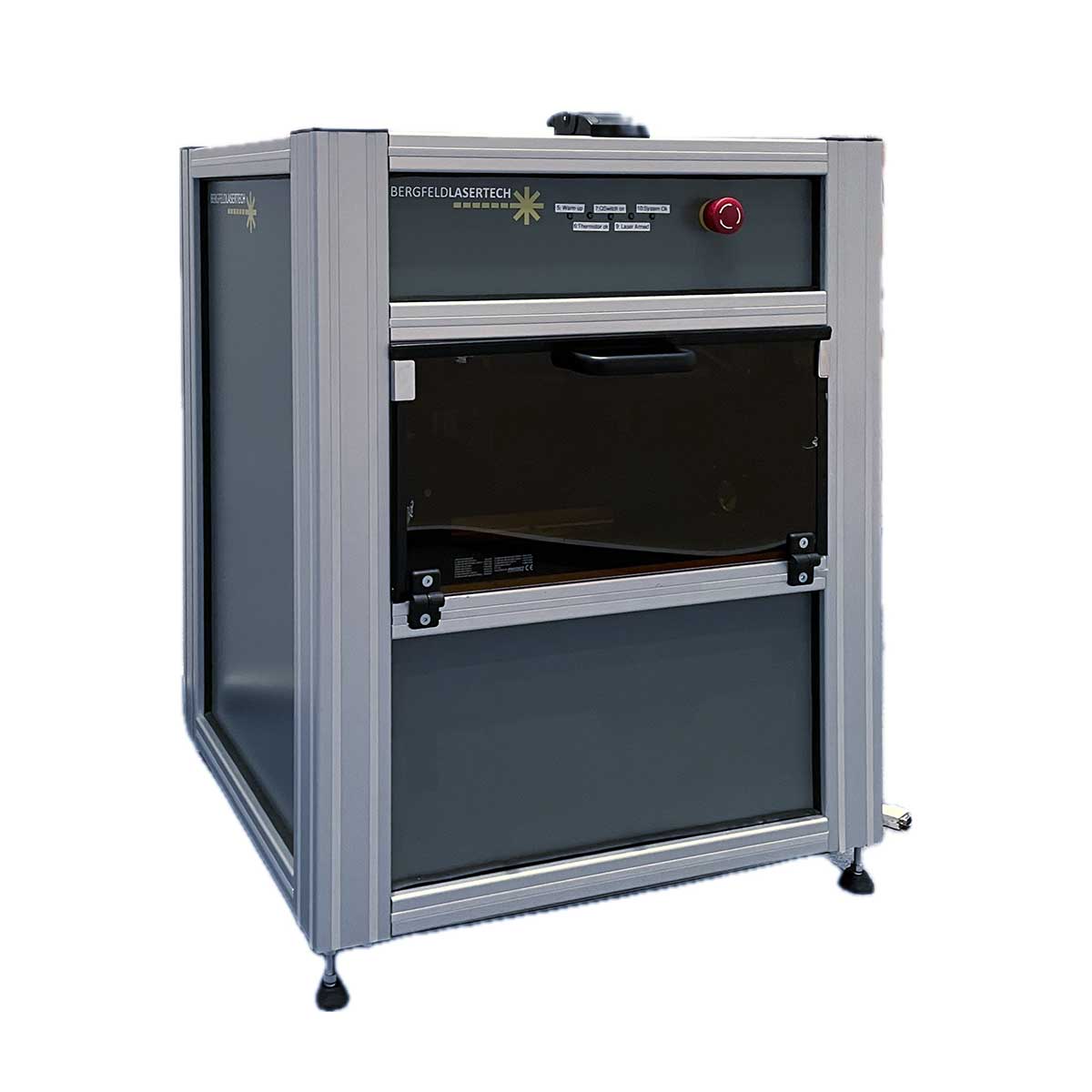
Available as mobile laser system for air
Stand alone laser scriber für ambient air for > 140 mm x 140 mm working ares with vision system for P1, P2, P3, LED and contact exposure
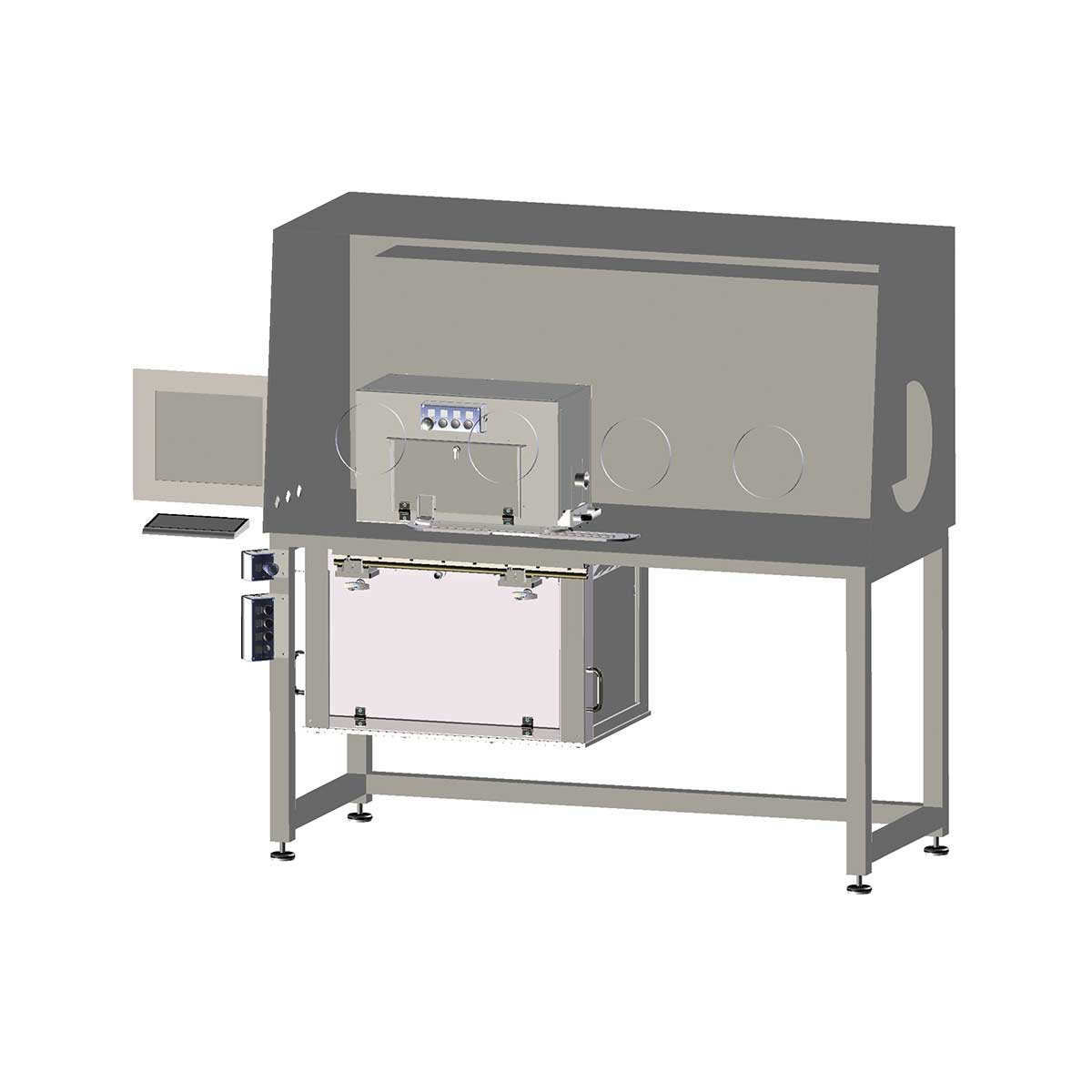
And available as laser system for glove box
Laser system for glove box.
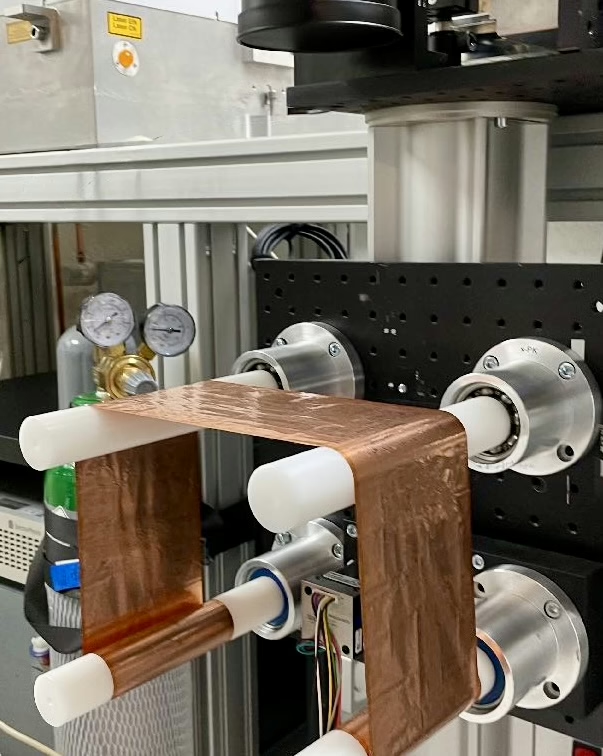
Available will roll-to-roll handling module
Laser system for glove box.

Contact us
Send us your request and we will get back to you.